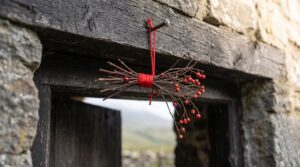
The internet calls it a cursed noble bloodline. The real killers were soil, shadow, and solitude.
A village empties out. The forest swallows the cellar holes. Then a story grows in the silence: an ancient family curse, demons in the trees, madness passed down like an heirloom. The legend is gripping and it’s almost entirely wrong.
Dudleytown makes a better case study than a ghost story. Its downfall shows how hard land and deep isolation can breed tales of the supernatural without any demons at all.
A town that never was a town
Dudleytown was never an incorporated town. It was a farming settlement in Cornwall, Connecticut, founded in the early 1740s by Thomas Griffis. The Dudley family settled there, and their name stuck to the hollow.
The setting shaped everything. Builders placed the village on a high hill ringed by steep mountains. Shadows pooled in the valley for much of the day. Locals named the place Dark Entry Forest, and the name fit.
The real curse was the ground
The soil doomed the settlers long before any demon could. The earth ran acidic, rocky, and thin. Crops struggled year after year. Clean drinking water was hard to reach.
Geography finished the job. When rich, flat farmland opened across the Midwest, families left for better dirt. Local iron mills closed and took the jobs with them. The population drained away for reasons any economist would recognize.
None of that stops a legend. Isolation does strange things to the mind. A lonely valley, failing crops, and long dark winters make fertile soil for fear, even when they poison it for cabbage.
The tragedies that fed the myth
Real misfortunes gave the curse its evidence. In 1792, Gershon Hollister died in a neighbor’s home, and the neighbor reportedly went mad, raving about strange creatures. Abiel Dudley lost his property and died senile and destitute.
General Heman Swift, a Revolutionary War hero, reportedly lost his mind after lightning struck and killed his wife on their porch. In the 1920s, Dr. William Clarke bought the land for a summer retreat. His wife is said to have gone insane while he was away.
String these events together and a curse seems obvious. Spread them across decades and a scattered population, and they look like ordinary tragedy. Grief, poverty, and disease visit every old settlement. Dudleytown just kept better ghost stories.
How the myth went national
Modern celebrity supercharged the legend. Paranormal investigators Ed and Lorraine Warren declared the site demonically possessed. In 1993, actor Dan Aykroyd called it the most haunted place on earth and even placed it in the wrong state.
The attention brought vandals. The Dark Entry Forest Association has kept the private land closed to the public for decades to stop the damage. Trespassers still try, and they still get caught.
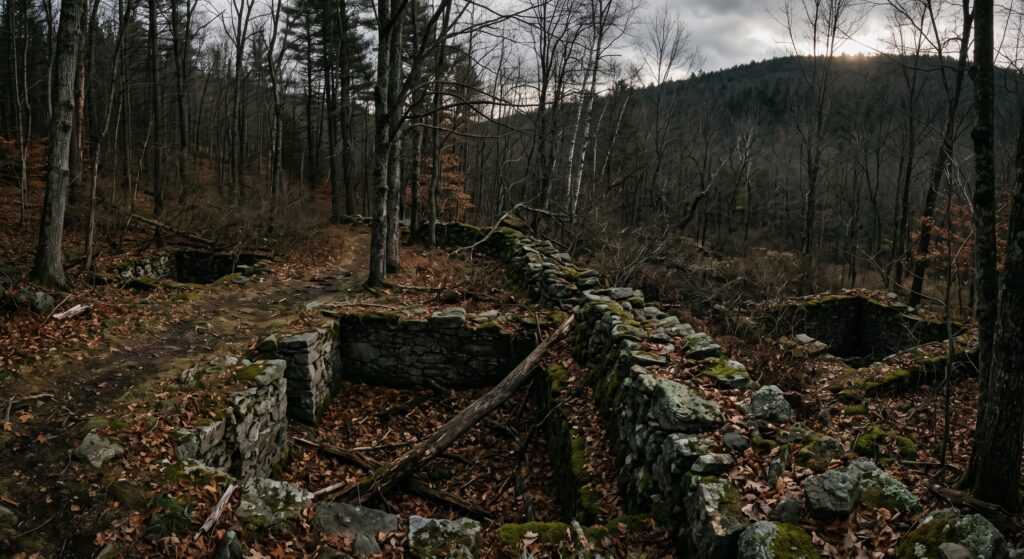
Walk the perimeter in your mind. Picture moss-covered stone walls and sunless shadow. The place is eerie, yes. Its true story is quieter and sadder than any demon: people fought bad land, lost, and left. The forest simply moved back in.
What isolation does to a mind
Return to the psychology, because it explains the curse better than any demon. Chronic isolation warps perception. It breeds anxiety, rumination, and a hunger for meaning in random misfortune.
Now place that mind in Dark Entry valley. The sun clears the ridge late and vanishes early. Winters run long and brutal. Neighbors live far apart or leave entirely. Every creak in the woods gains weight in a place that quiet.
Under those conditions, a run of ordinary tragedies stops looking ordinary. A death, a bout of dementia, a lightning strike: each becomes a link in a chain. The chain becomes a curse. The curse becomes the town’s identity.
The paper trail versus the legend
Historians who dig into Dudleytown find records, not demons. They find failing farms, tax rolls, and families migrating toward better land. They find a settlement that shrank for the same reasons countless New England hill towns shrank.
The dramatic biographies do not survive scrutiny well either. Many curse anecdotes trace to later retellings rather than contemporary documents. Names get shuffled. Dates drift. The scarier the version, the thinner the sourcing tends to be.
That does not mean the suffering was fake. Real people lost real things here. A curse is just a tidy label for a slow, unglamorous collapse.
Why the woods still unsettle us
Stand at the edge of the closed forest and the eeriness is real. Cellar holes gape in the leaf litter. Stone walls run to nowhere. The shadows pool exactly as the old name promised. The place looks haunted because abandonment always does.
That is the honest source of the chill. We feel unease at any spot where people tried, failed, and left. The empty hearths do the emotional work. No demon is required to make a dead village feel wrong.
So respect the private land and the association protecting it. Then let Dudleytown teach its real lesson. Hard ground and deep loneliness can manufacture a curse out of nothing but bad luck and human imagination.
Lessons from a dead village
Draw the wider lesson from Dudleytown’s ruins. Communities do not usually collapse because of curses. They collapse because the economics turn against them. When the farming fails and the jobs leave, the people follow.
New England is full of such places. Hill towns emptied as better land and better work opened elsewhere. Most vanished without a legend. Dudleytown happened to sit in a shadowed valley with a sinister name, so its story grew teeth.
The supernatural framing does real harm too. It obscures the actual causes of rural decline. It turns hardworking, unlucky settlers into cursed victims. It replaces history with horror, and history is what we actually need to understand.
So let the cellar holes speak plainly. They mark a place where people tried to make a hard land yield, and could not. That struggle is worth remembering honestly, without a single demon added to the story.