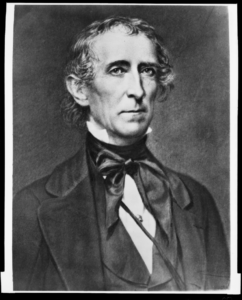
Every American president since 1853 has stood inside the Willard Hotel. The building earned its nickname, the Residence of Presidents, honestly. Yet the most enduring guest shunned the spotlight.
She wanted her son back.
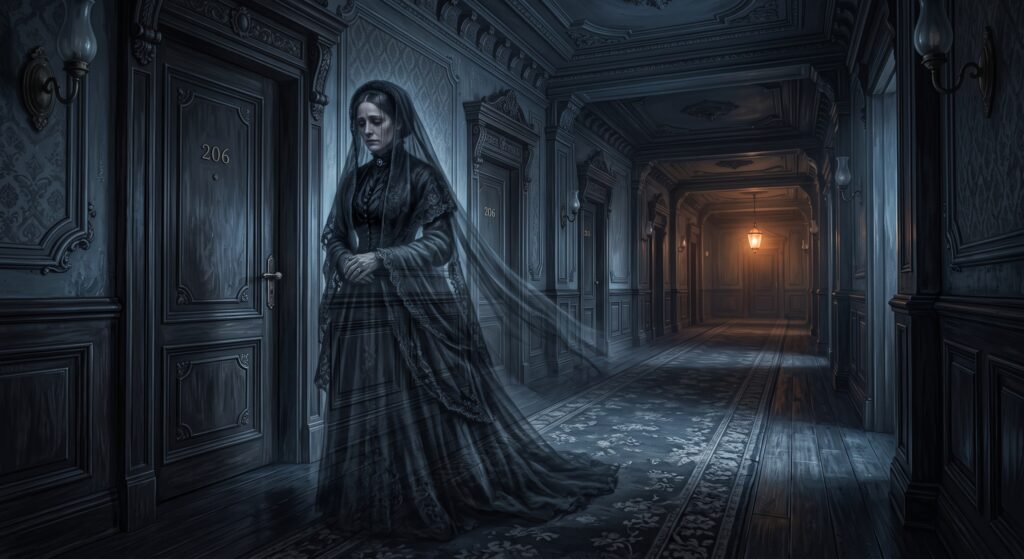
Jane Pierce carried a grief so heavy that people claim it never left the Willard’s upper floors. Staff describe a coldness in the corridors that has nothing to do with the thermostat. Guests speak of a woman in black who drifts past and then simply is not there.
Most Willard ghost stories chase the famous men who brokered power in the lobby. This one belongs to a mother. To understand why she lingers, you have to start with a single January afternoon that shattered a family before it ever reached the White House.
The Tragedy on the Tracks
On January 6, 1853, the Pierce family boarded a train home to Concord, New Hampshire. Franklin Pierce had just won the presidency. Jane had begged him to stay out of politics, and he had promised he would. He broke that promise, and now the family was riding toward an inauguration she dreaded.
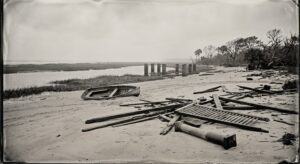
Roughly three miles from the Andover station, an axle fractured. The coach tumbled down an embankment and split apart. A New York newspaper account said the car broke like a cigar box. Eleven-year-old Benjamin, whom everyone called Bennie, was the only passenger killed.
Both parents survived nearly unharmed. Franklin reached the boy first and tried to turn his wife away. He failed. Jane saw her last surviving child crushed in the wreckage, and something inside her closed for ever.
The couple had already buried two sons. Their firstborn died in infancy. Their second, Frank Robert, died of typhus at age four. Bennie was everything they had left, the center of their world. In an instant, that world went dark.
Jane reached a terrible conclusion in the days that followed. She decided Bennie’s death was divine punishment for her husband’s ambition. God had taken her boy, she believed, because Franklin chose power over the quiet family life she wanted. She never surrendered that belief, and it poisoned every year that followed.
A First Lady Who Vanished Into Mourning
Jane refused to attend the inauguration. She could not bring herself to bury Bennie either. Franklin took the oath without a Bible, affirming it instead on a law book, a man convinced he had brought this grief upon his own house.
When Jane finally reached Washington, she locked herself away on the second floor of the White House for much of her husband’s term. She avoided public duties. She avoided guests. Her absence grew so complete that observers began calling her the Shadow of the White House.
She wore black without pause. She filled pages with letters written to her dead son, exploring God’s will and her own guilt in aching detail. She reportedly held seances, desperate for one more word from the boy she had lost. Grief became her whole vocation.
Popular legend links her mourning to the Willard Hotel, where she is said to have spent part of that dark period. Some retellings claim she died there of melancholia. Here the record needs a correction. Jane Pierce died in 1863, in Andover, Massachusetts, from tuberculosis, a full decade after the accident.
The Willard legend endures anyway. Sorrow that deep seems to demand a haunted address, and the hotel’s long presidential history gave the story a natural home.
The Cold Corridors and the Lady in Black
Guests and overnight staff report a woman drifting along the Willard’s upper hallways. She wears nineteenth-century mourning attire, moves without a sound, and vanishes when anyone looks directly at her.
Witnesses describe more than a figure. They describe a feeling. The air turns dense and sorrowful, as though the hallway itself remembers something painful. Several accounts note a sharp drop in temperature near her, a chill that matches the cold despair she carried through life.
The pattern rarely varies. There are no slamming doors, no menace, no theatrics. There is only a quiet, grieving presence and the sense that she is searching for something she will never find.
Skeptics point out, fairly, that no evidence ties Jane Pierce’s death to the hotel. That misses the point of the story. The Willard legend survives because it gives shape to a grief that history could not repair. People need somewhere to place a sorrow that large.
A Grief the Nation Watched
Jane’s mourning did not stay private. The Pierce presidency itself carried the shadow of the accident from its first hour, and Washington society noticed the empty place beside the president at every event.
The inaugural ball was canceled. The new first lady declined to host, and the mansion took on a hushed, funereal mood that visitors remarked on for years. One historian noted that the couple seemed to move through their White House years like two people in perpetual mourning.
Some accounts describe Jane spending long stretches at her writing desk, composing those letters to Bennie in a careful hand. She would ask the dead boy for forgiveness, for guidance, for a sign. The habit blurred the line between devotion and something closer to a haunting she carried within herself.
By the time she reached the Willard in the popular retelling, she was already a woman half in the world of the living and half turned toward the dead. That is the emotional soil from which the ghost story grew.
Why the Legend Refuses to Die
Historians can correct the factual errors easily. Jane did not die at the Willard, and Bennie’s accident happened in Massachusetts, not Baltimore, as some retellings claim. Yet the story survives every correction.
It survives because it is emotionally true, even where it is factually loose. A mother destroyed by the loss of her only child, drifting through a grand hotel in black, is an image that fits the woman perfectly. The legend captures her essence even when it misplaces her geography.
That is the strange power of a good haunting. It preserves a feeling that dry biography can lose. Jane Pierce’s documented life was one of near-total grief, and the Willard’s lady in black keeps that grief alive for anyone who walks the halls.
Remember her, then, not as a footnote to her husband’s forgettable term, but as one of the most heartbroken figures ever to live in the public eye.
A Sorrow That Outlived the Woman
Jane never got her miracle. She never heard Bennie’s voice again, no matter how many letters she wrote or seances she held. She died still convinced that her family had paid an unbearable price for a job her husband never should have taken.
That is what makes the haunting so different from the others at the Willard. It carries no scandal and no swagger. It carries only loss.
If any presence still walks those corridors, it is not a monster to fear. It is a mother, dressed in black, still waiting, still listening for a son who will never answer.
Visit the Willard and admire its grand lobby and gilded history. Then step into the quiet of an upper hallway and consider the woman the guidebooks rush past. Her story is the saddest one the building holds, and it may be the truest ghost of them all.
References & Further Reading
• Smithsonian First Ladies: Jane Pierce
• Franklin Pierce Rail Accident (Wikipedia)
• The Willard Hotel Ghosts (Travel Hag)
• First Lady Jane Pierce Mourns Her Son (Shapell Manuscript Foundation)