Step off a long trail near Glastenbury Mountain at dusk and the forest changes: the canopy closes overhead, the light drains fast, and the birdsong stops. This is the heart of the Bennington Triangle, a patch of southwestern Vermont wilderness where a two-century-old cryptid legend collides with real events and varied history. People here talk about the Bennington Monster, a hairy giant roaming the ridges. They also talk about eight people who walked into these woods and never walked out. The mountain keeps both stories. What separates the beast from the truth is thinner than most retellings admit, and the gap is where the account lives.
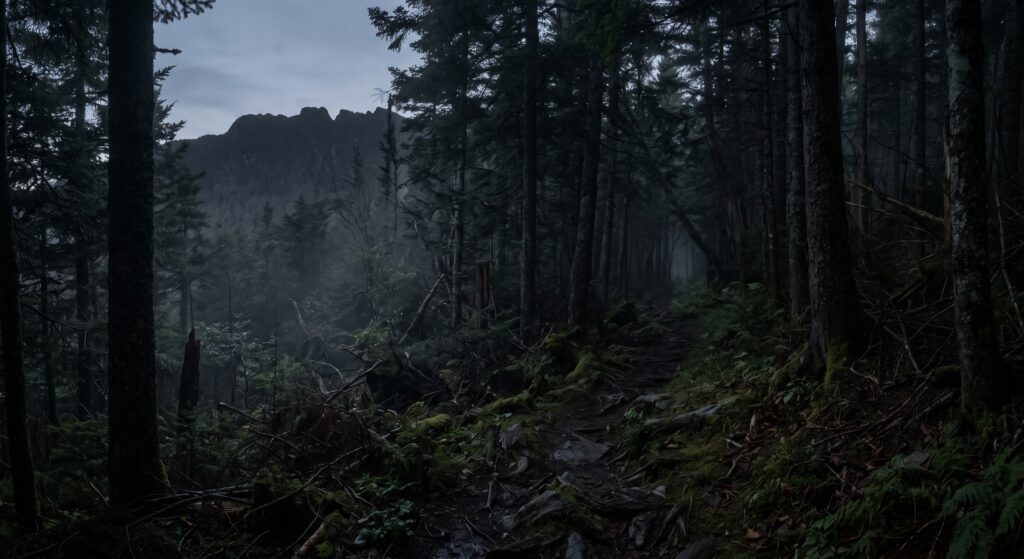
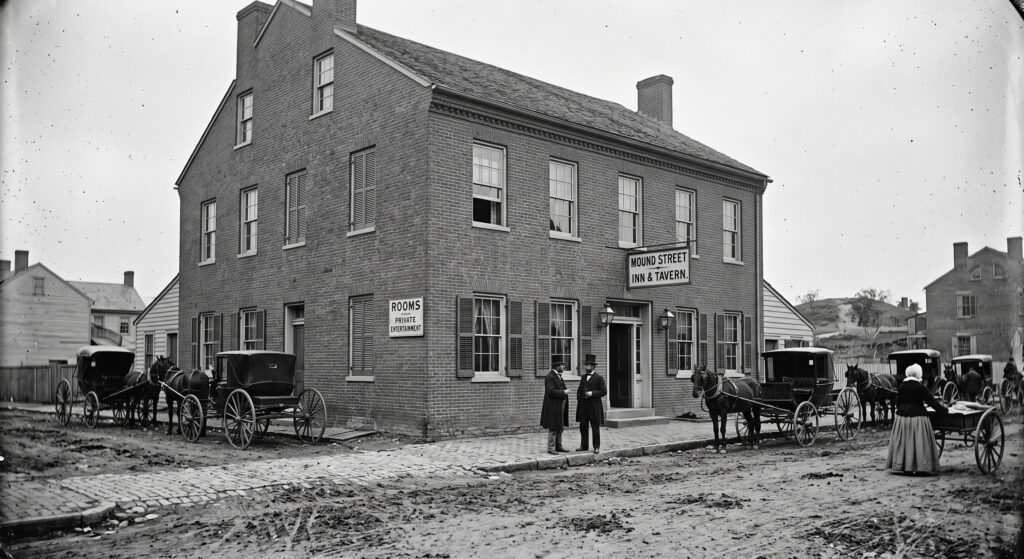
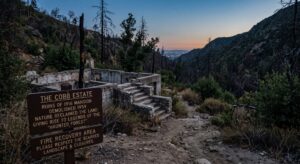
The region spans Bennington, Woodford, Shaftesbury, and the Green Mountains. Glastenbury Mountain stands 3,747 feet tall and feeds the Deerfield River, Bulls Brook, and Kitchen Brook. After the Civil War, South Glastenbury and Fayetteville boomed as logging and charcoal towns. A massive flood in 1897 washed out a new scenic tram line meant to draw tourists, and the economy collapsed. By 1937, only a handful of residents remained, and Vermont formally unincorporated the town. Left behind were decaying mills, abandoned roads, and open mine shafts. Folklorist Joseph Citro named the area the “Bennington Triangle” in 1992, borrowing the mystique from the Massachusetts Bridgewater Triangle. See our other post on the Bennington Triangle to learn more about the mysteries and disappearances that made the region famous.
Two Centuries of the Beast
Witnesses described the Bennington Monster with remarkable consistency. They report a bipedal, ape-like figure standing 6 to 8 feet tall and covered in thick dark fur. It has broad shoulders, almost no neck, and a guttural roar that carries down the valleys. The first widely said encounter dates to the early 1800s. A stagecoach stopped on a storm-washed road and the driver climbed to inspect the damage. He found huge, barefoot, non-human tracks pressed into the mud. Moments later, a hairy beast burst from the bushes and knocked the loaded coach onto its side, then fled screaming.
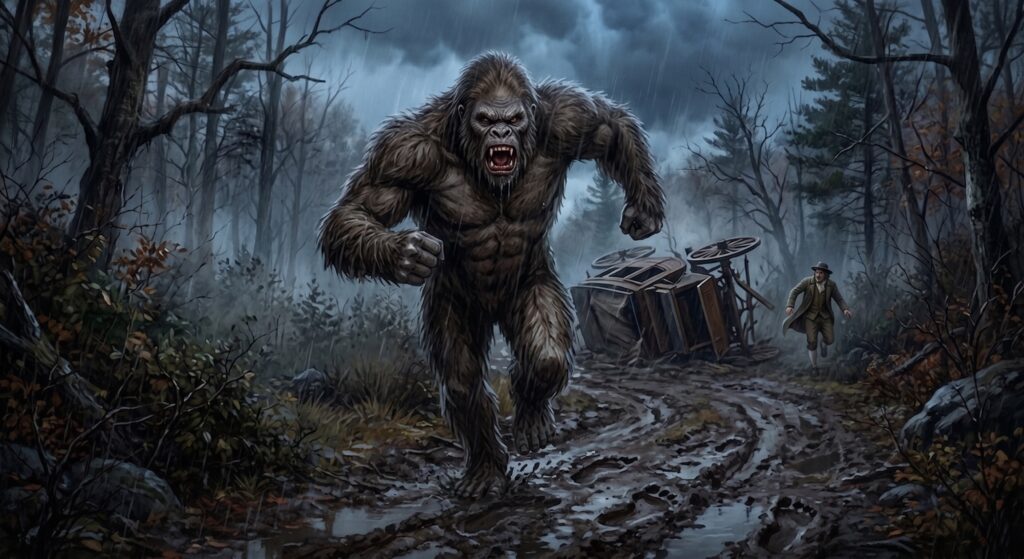
In 1879, The New York Times reported that two hunters north of Pownal met a wild-eyed, red-haired creature. One man shot and wounded it. It shrieked, charged, and drove both hunters into a panicked retreat.
The legend lived on, and in September 2003, a man driving near Route 7 toward Glastenbury spotted a tall, black, hairy figure moving upright at dusk. That October, writer Doug Dorst reported seeing an enormous biped near Bennington College. He first took it for a man in a snowsuit, then realized the scale and gait were wrong for any human.
The Skeptics Always Point to an Upright Bear
Officials reviewed the 2003 roadside sighting and offered a mundane answer. They attributed it to an upright black bear. Glastenbury supports a large bear population. A standing black bear reaches 7 feet, moves on two legs briefly, and shows dark fur and heavy shoulders. Amid fading light on a forest roadside, the outline matches the classic monster description.
That explanation does not close the case. It reframes it. The Bennington Monster may be less a single hidden species than a durable pattern of perception. A dark shape in dim woods, modeled fear, and a region primed by legend can turn a familiar animal into a myth. This lens does not erase the sightings. It explains why they cluster here, on a mountain already thick with story.
Outlaws, Hermits, and a Man Who Heard Voices
Monster legend often blurs with something more human. Reports of feral men, hermits, and violent drifters hiding in the abandoned mills fed a composite bogeyman. Locals near Somerset described a nude, pistol-waving hermit who harassed settlers in 1867. Identical reports resurfaced around 1967, a century later.
One real crime stands out among the other lore. On April 4, 1892, the sawmill worker Henry McDowell bludgeoned coworker John Crowley to death with a chunk of firewood after a night of heavy drinking. McDowell claimed voices in his head commanded the attack. He confessed and landed in the Waterbury asylum. He later escaped by hiding in a railroad car. Authorities never recaptured him. Rumor insisted that he returned to Glastenbury and lived as a hairy wild man.
The Mystery Remains
So, what walks the ridges of Glastenbury? Probably bears, wind, cold, and the ordinary tragedy of people lost among unforgiving terrain. The mountain does not need a monster to be dangerous. Visit at dusk and you will feel it. The silence closes in, the light fails, and every dark shape becomes a question the woods refuse to answer.
References & Further Reading
Legends of America – The Bennington Triangle