The building at 22 East Mound Street has worn many faces: tavern, inn, bordello, jury room. Ghost hunters chase its spirits, but the deeper story runs beneath the floorboards and back through two centuries. This single address ties an ancient burial mound to a real 19th-century murder, and that layered history is the true haunt.
A mound beneath the street
Before any building stood here, a 40-foot Hopewell burial mound rose on the site. Settlers dismantled it in the 1820s and used the earth to make bricks, including bricks for Ohio’s first statehouse. Mound Street itself takes its name from that vanished earthwork. The city quite literally built its government from an Indigenous grave.
The tavern takes shape
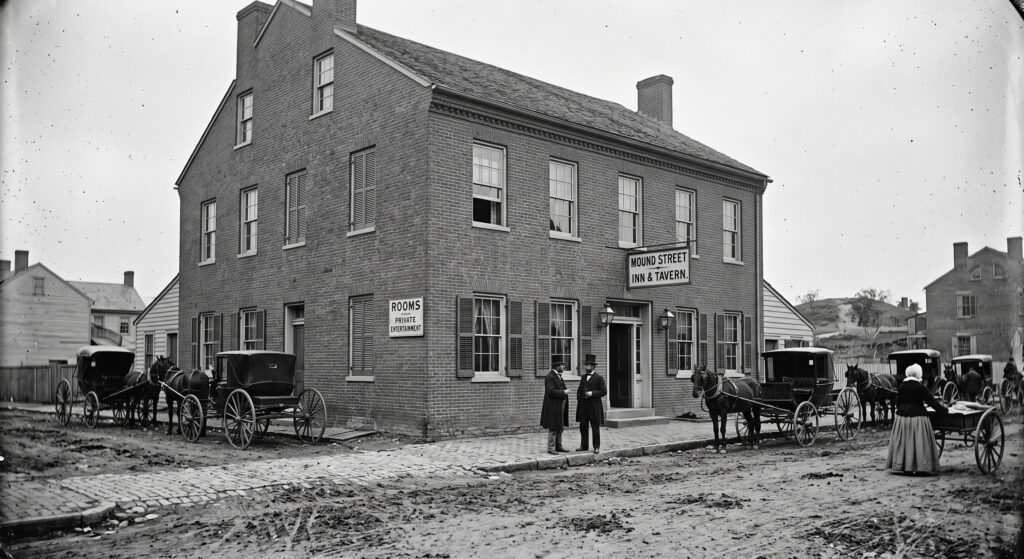
The current structure went up in the 1830s to house travelers in town for court cases, which explains later names like the Jury Room and 1831 Tavern. A portion has almost always served as a tavern. Other parts operated as an inn and, in the 1850s, a bordello. A fire in 1885 removed the original third floor.
The 1859 killing
The building’s darkest documented moment came in March 1859. A woman named Francis Miller was arrested for killing a man who tried to force his way into the bordello. Accounts describe an intoxicated man and two friends banging on the door and threatening to break it down. This was a real death and a real arrest, not folklore.
Why the spirits feel plausible
Layer it up: an ancient burial mound destroyed, a tavern that hosted the desperate and the transient, a bordello, a killing, a fire. Few Columbus addresses stack so much history and hardship into one footprint. When patrons sense something heavy in the air, the building’s real past gives that feeling plenty to draw on.
Raise a glass if you visit, and remember what stood here first. The mound, the travelers, and a woman named Francis Miller are the story. The ghosts are just the echo.
References & Further Reading
Franklin County Hauntings & Legends, Ohio Exploration Society