A psychiatrist’s decades of case files, birthmarks that match old wounds, and the criticisms that keep the question open.
A toddler starts describing a life that is not his, in a village he has never seen. He carries a birthmark exactly where that other person was fatally wounded. One researcher spent forty years documenting cases like this. The results are hard to prove and harder to ignore.
The work belongs to Dr. Ian Stevenson. His files raise a question that mainstream science mostly avoids, and that avoidance is itself worth examining.
The Research of Ian Stevenson
Ian Stevenson chaired the Department of Psychiatry at the University of Virginia. In 1961 he began investigating children, mostly in India, Sri Lanka, and Lebanon, who spoke of previous lives. His 1966 book, Twenty Cases Suggestive of Reincarnation, launched the field.
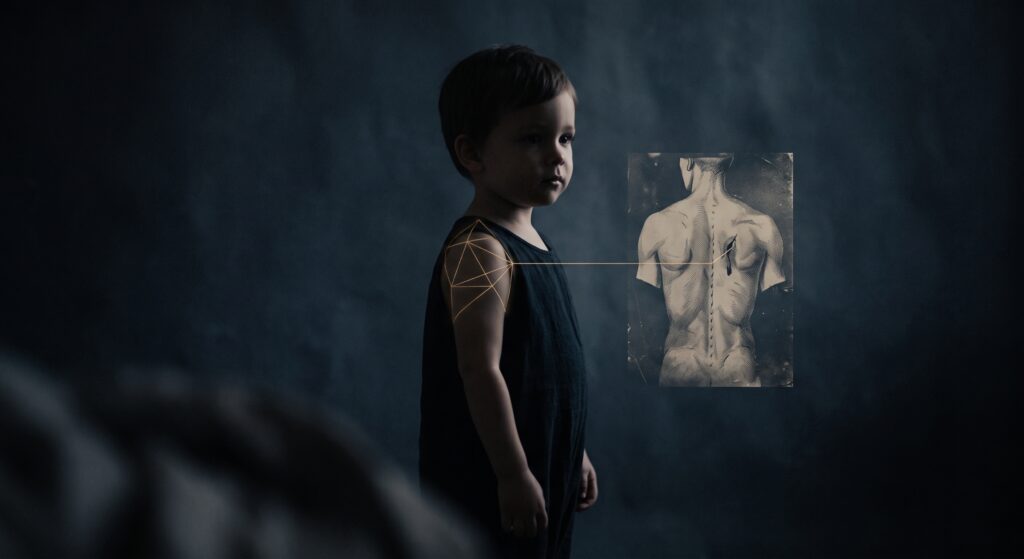
The children typically began around age two or three, often with startling specificity. In the strongest cases, Stevenson traced their statements to a real deceased person the family could not plausibly have known about. He was careful, calling the cases suggestive, never proof.
The Birthmark Connection
One pattern fascinated Stevenson most. Many of the children carried birthmarks or birth defects that appeared to match wounds on the person they claimed to have been. He devoted a two-volume 1997 work, Reincarnation and Biology, to the subject.
The proposed idea is provocative. A fatal wound in one life, the theory suggests, might imprint as a mark on the next body. Stevenson sometimes documented these marks against a deceased person’s autopsy records and photographs.
Representative Cases
Consider two examples from his files. A boy in Lebanon recalled being shot and killed and bore a birthmark on the right side of his abdomen. When Stevenson asked where the remembered man had been wounded, the man’s mother pointed to the same spot.
In another case, a Turkish boy whose face was underdeveloped on one side described the life of a man killed by a shotgun blast at close range. These correspondences, drawn from many similar files, are what give the work its unsettling weight.
The Work Continues
Stevenson did not work alone or stop the field at his death in 2007. He built a research division at the University of Virginia, now the Division of Perceptual Studies, funded by a bequest specifically for the work. Colleagues like Jim Tucker carried it forward.
One early criticism was that cases clustered in cultures that believe in reincarnation. Stevenson answered with a study of American cases and later a volume of European ones. Few American children made verifiable statements, yet the cases resembled the Asian ones in age of onset, content, and behavior. That parallel is part of what keeps the question alive.
The Serious Criticisms
Honest coverage must include the doubts. Critics note that many cases arose in cultures that already believe in reincarnation, raising the risk of unconscious shaping. Reviewer Champe Ransom pointed to leading questions and to families of the deceased and the child often meeting before any investigation began.
That contamination is the core problem. Once two families compare notes, a child’s vague statements can be refined into apparent hits. Stevenson addressed some objections with American and European cases, but the methodological gaps remain real.
Cellular Memory and Open Questions
Some thinkers reach for other frameworks, such as cellular or epigenetic memory, the idea that trauma might carry forward biologically. It is speculative and not established science, but it shows how people try to bridge the gap.
Stevenson himself stayed measured, saying no single case compelled belief in reincarnation. That balance is the right note to end on. Examine your own birthmarks if you like, and wonder. Just hold the wonder and the skepticism together, exactly as the careful researcher did.
References & Further Reading
Twenty Cases Suggestive of Reincarnation, Wikipedia
Criticisms of Reincarnation Case Studies, Psi Encyclopedia