Across northern Mexico and South Texas, families warn children about La Lechuza. The name simply means barn owl. The legend means far more.
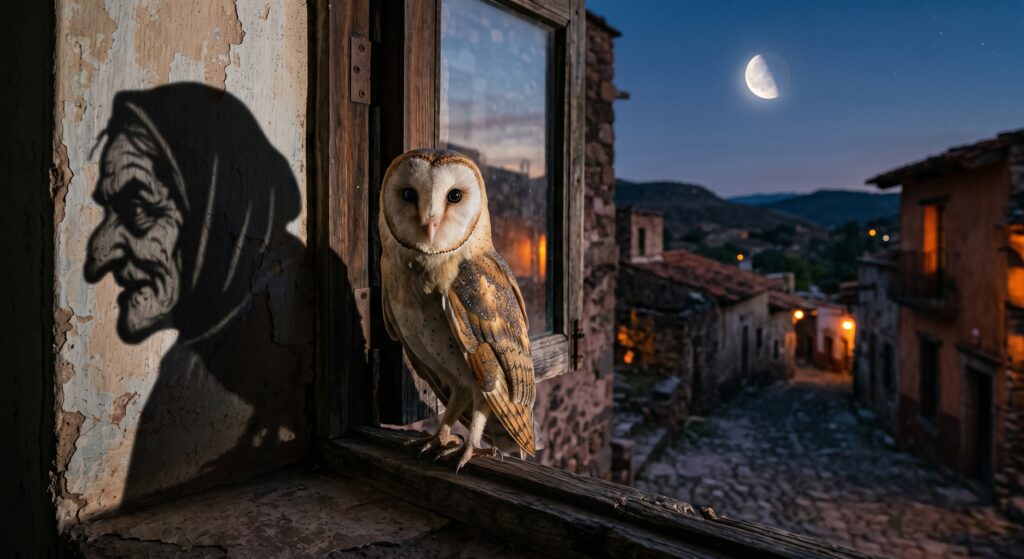
In the stories, a giant owl with an old woman’s face hunts at night. Some tellings make her seven feet tall with a fifteen-foot wingspan. She whistles outside windows and mimics a crying baby to lure people out.
Most versions begin the same way. A woman is wronged. Villagers accuse her of witchcraft after a child vanishes or a drunk driver kills her child. She makes a pact and returns as a shape-shifting owl to take revenge.
Where the legend came from
The roots run deep. Before the Spanish arrived, Mesoamerican cultures already linked owls to rain gods, omens, and the underworld. The relationship was complicated, not purely evil.
Spanish colonization sharpened it. Christian teaching recast the owl as a servant of the devil and a mark of witchcraft. La Lechuza grew from that collision of beliefs.
Folklorist Rachel Gonzalez-Martin of UT Austin notes the constant thread. La Lechuza always starts as a woman whom whom the community has failed. The monster is the town’s guilt given wings.
The danger the legend still carries
Here is the part most spooky roundups leave out. The legend has real victims, and they have feathers.
In August 2014, a video spread of villagers in Mexico interrogating and burning an owl alive. They insisted the bird was a lechuza. Its cries, they claimed, were the witch screaming. Viewers condemned it as superstition turned to cruelty.
Barn owls are harmless, beneficial hunters of rats and mice. When folklore teaches people to fear them, ordinary birds die for a myth.
Folklore as a warning system
Strip away the horror, and La Lechuza functions like a rule. Do not wander alone at night. Do not follow strange sounds into the dark. Respect the grief of your neighbors.
Protective charms fit the same logic: seven knots tied in a rope by the door, salt and chili thrown at the bird, and a recited prayer. These rituals gave frightened people a sense of control.
The witch owl endures because it teaches caution and remembers old injustices.
References & Further Reading
Texas Standard, La Lechuza legend as cautionary tale