Rattling chains, a limestone lair, and a bloodline that runs to Harry Potter.
Not just another black dog
Yorkshire has its own monstrous hound, and it is not simply Black Shuck moved north. The Barghest earns a separate entry.
What sets it apart is transformation. Where Shuck is a fixed giant dog, the Barghest is a shapeshifter. It can appear as a huge black dog, then take other forms.
That fluidity makes it slippery in folklore. Witnesses could attribute almost any strange encounter to it.
The clanking chains
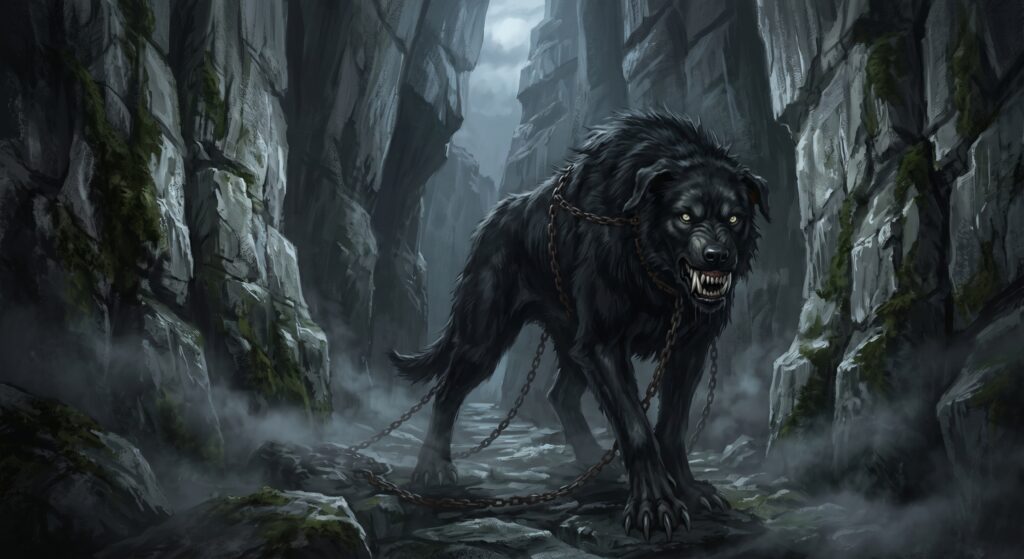
The Barghest announces itself by sound as much as sight. Its signature is a heavy rattling of chains, like something dragging great weights behind it.
That auditory warning is the detail collectors of folklore remember. A black shape you might dismiss. Chains dragging in the dark you cannot.
Some tales give it huge teeth and claws and, like many British hounds, tie its appearance to death or misfortune.
The lair at Troller’s Gill
Legends often anchor a monster to a specific place, and the Barghest has one. Troller’s Gill is a narrow limestone gorge in the Yorkshire Dales.
The steep, echoing ravine is a natural stage for a monster story. Sound behaves strangely there, and the walls close in overhead.
Naming a real, findable location gives the legend its staying power. You can stand where the Barghest supposedly waits, which keeps the tale alive.
From Yorkshire to modern fantasy
The Barghest’s influence runs deep into pop culture. British black dog legends shaped the literary hellhound, including the Grim, the death omen dog in the Harry Potter series.
Dungeons and Dragons borrowed the name outright for a monster. The folklore keeps feeding modern storytelling.
That is how oral legend survives now. It migrates into novels, games, and films.
References & Further Reading
Myth and Folklore Wiki, Black Shuck and British hound comparisons
Modern Farmer, Devil Dogs: The Mysterious Black Dogs of England