The red-eyed hound of East Anglia
Along the coast of East Anglia, people have long spoken of Black Shuck. He is a giant black dog with blazing eyes, said to roam lonely roads and churchyards.
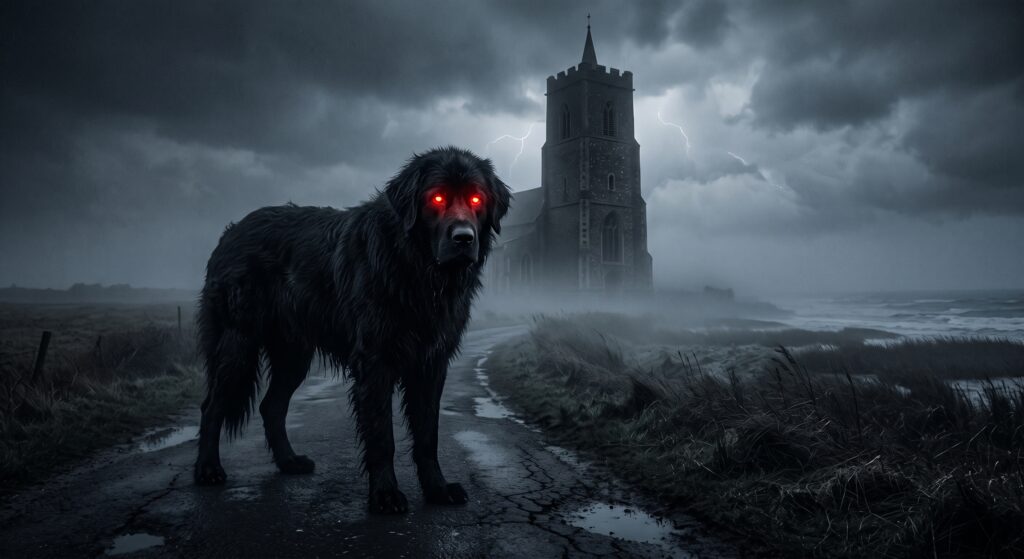
His name likely comes from the Old English “scucca,” meaning demon. To meet his gaze, tradition warns, is to receive an omen of death for yourself or a loved one.
He is often described as the size of a large horse or a monstrous mastiff. He is the template for centuries of British black dog lore.
The Bungay church attack
The most famous account is dated with unusual precision. On August 4, 1577, a violent storm hit Suffolk.
Reverend Abraham Fleming published ‘A Straunge and Terrible Wunder.’ He described a black dog bursting into St. Mary’s Church in Bungay during the storm, killing two kneeling worshippers.
The same day, the story goes, the beast struck Holy Trinity Church in Blythburgh, killed a man and a boy, and collapsed the steeple. Visitors still see scorch marks on the north door, which they call the devil’s fingerprints.
What the records actually show
Strip the legend back and a real event appears. Contemporary records confirm a ferocious electrical storm on that date. Lightning struck Bungay Church, damaging the tower and clock.
Historians David Waldron and Christopher Reeve offer a grounded reading. A terrifying storm, deadly lightning, and the trauma of the Reformation combined to create a diabolical story.
Fleming was a London clergyman writing from secondhand accounts. His pamphlet turned a natural disaster into a demonic visitation, which was excellent for sales.
The skeleton that fooled the tabloids
In 2014 the story surged back. Archaeologists from DigVentures unearthed a large dog skeleton at Leiston Abbey. Headlines asked whether Black Shuck had been found.
The truth was tamer. The dog stood about twenty-eight inches at the shoulder, roughly Great Dane sized. The ‘seven feet’ figure referred to its height when rearing on its hind legs. Radiocarbon dating placed it around 1650, decades too late for the 1577 event.
So the bones were not Shuck. They were an unusually large abbey dog. Were these tales inspired by real rabid animals and storms or by pure superstition? At Bungay, the honest answer is a bit of both.
References & Further Reading
Folklore Thursday, Black Shuck: Proof of Existence Finally Found?